Sunday, 23 September 2012

3 influential music videos

Kelly Clarkson - Because Of You

This music video takes us on a journey throughout the length of the song. the lighting used is very dark which creates a strong atmosphere connecting the visuals with the music and lyrics. I particularly liked the shot of the mum clearly waiting for the husband to come and eat the dinner she made, this shot is built up well through the use of lighting and the visuals really match at this point, the low lighting, the rain outside the window and the emotion shown through the womens face and body language creates a good bond between that itself and the particular lyrics in that shot and the ones that closely follow. Another part I really liked was when the mum was sitting on the bed taking pills and the young girl who is suppost to represent the artist at a younger age, is standing outside although we cannot see her at this point, the mother comes to close the door and because it has a mirror on it, when the door is shut we are able see the emotion and sadness of this little girl which striked me as a clever idea which merged well within the video.

http://www.youtube.com/watch?v=Ra-Om7UMSJc&feature=related

Taylor Swift - Love Story
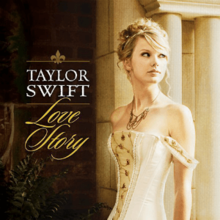
Taylor Swift's lyrics of Love Story are portrayed through her music video completely. There are specific times when the visuals match up to the lyrics, such as 'see the party, the ballgowns' and in this specific shot there are several men and women at the party in the background with the women dressed in ballgowns. Taylor Swift plays the main character in this video and refers to herself and the man as 'Romeo and Juliet' she also refers to particular scenes of Romeo and Juilet incorporating this in to the storyline of her video. For example, Taylor Swift is up on the balcony whilst the male character is on his way to rescue her. The scenery and buildings used in this video stand out in a good way, the visuals and storyline match the lyrics extremely well and the cuts between each shot match the music well.
http://www.youtube.com/watch?v=8xg3vE8Ie_E

Enrique Iglesias - Do You Know
http://www.youtube.com/watch?v=UqON44CLaQM&feature=relmfu
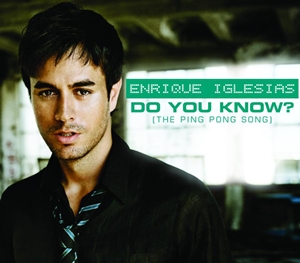
I really love this video because it uses some brilliant shots, for example when the 'director' says "black and white" it changes from colour to black and white. I also really like the uniqueness of the idea of the director telling Enrique the ideas for the video and the music video is portrayed through the eyes of them picturing what it would look like. The use of lots of close ups on the artist and the girl matches the music and lyrics really well. Everytime the director is talking to Enrique the video is suddenly bright and the lighting used is very strong which visualises for the audience lots of colour, however when we see the shots of the proposed music video within this almost short film concepted idea, it is all very dark, the lighting used is very soft, and all the character's clothing are dark too.

Wednesday, 19 September 2012

Artist Confirmation


Andrew Goodwins Theory

Andrew Goodwin identified various techniques which in are the key to a music video.

He said that there is a bond between the lyrics and the visuals, meaning that the visuals will illustrate, amplify or contradict the lyrics themselves.
He also said there is a bond between the music and the visuals, again with the visuals either illustrating, amplifying or contradicting the music.
Goodwin also stated that in all music videos, close-ups of the artist or vocalist are always used, along with the video following a genre-related style, such as having a story to match the meaning of the lyrics.
Close-ups of the artist/vocalist are used to build up the connection between the audience and themselves, it helps us learn a little bit more about them through their emotions and is undependent on it's genre. It gives us a good representation of themselves and their music.
Andrew Goodwin says that Voyeurism often plays a huge part in music videos, especially in connection to women. It is used to draw attraction to the video and particularly works well for males.
He goes further to state that intertextual references with other media texts could be present.
Goodwin suggests that music videos are often established by the relationship between both the visuals, the artist and the song and the music video creates these links.

Tuesday, 18 September 2012

Music History Timeline

In 1894 the first 'illustrated song' was produced, this involved several still images which were projected on to a screen whilst a live performance of Little Lost Child was played. This allowed the audience for the first time ever to have a visual whilst listening to a song at the same time.

By 1926 the arrival of the 'Talkies' brought the idea of visuals with music further through musical short films. These featured bands, vocalists and dancers which gave a live experience of what was to become a music video.

Longer musical films were established during the period of 1930 - 1959 and this was a genre in which songs were incorporated in to the film itself.
1940 - 1949 saw the arrival of many promotional clips which showed many famous jazz artists and their bands on in a mini movie type of clip.

In 1964 the Beatles release their 'A Hard Days Night' which was a motion picture featuring themselves, this was definitely a step forward towards the modern music video.

Shortly after in 1965, the Beatles recorded 10 films which were then used to promote the release of albums. This is what really kick started the idea of video promotion into practise.

Music marketing by the mid 80's was starting to be taken over by music videos as the launch of MTV, which was a 24 hour music programme allowed music videos to be shown around the clock.

Michael Jackson's music video 'Thriller' was released on December 2nd 1983, the music video was 13 minutes and 43 seconds long, it was voted as the most influential pop music video of all time and it was listed as the most successful video ever in 2006 by Guiness World Records.

Following 'Thriller', on May 31st 1995 Michael Jackson released his song 'Scream' which featured his sister. This video won many MTV music awards along with a grammy. It cost in total around 7 million dollars landing itself a spot in the Guiness World Records for the most expensive video ever made.

The launch of Youtube in 2005 was a massive step forward for the music industry and in terms of music videos and reaching a wider audience for an artist to promote their music, this was definitely set to be a huge success. Youtube is a video sharing website which allows not only signed artists to post music videos online but it allows absolutely anybody the ability to upload their videos for people all over the world to view. In May 2011 Youtube said in a blog that they were receiving more than 3 billion video streams per day, however in January 2012 this figure had risen to over 4 billion views per day, showing us that Youtube is still a consistently growing social media site 7 years since it was first available.
In 2005 we also saw the launch of iTunes, which is a media player that allows you to play, save and organise music, but more importantly allows you to download music videos directly from the internet. iTunes was proved to be a huge success and crucial step forward within music videos after reaching a mark of over one million downloads after just twenty days.

In 2010, 183 million viewers boosted the number of music videos viewed online to roughly 34 billion, this just shows how relevant and necessary music videos are to both the artists target audiences and other audiences as they are easily accessible and there is a clear demand for them.


Friday, 14 September 2012

A2 Task


The task for A2 media this year is to plan and to create a promotional music video with the original music track of an unsigned artist, we are also required to produce a digi-pack which is the CD cover and also a magazine advert, these are all forms of promoting the artists song and will allow me to improve on skills i have already gained through AS media whilst also allowing me to develop new skills. 

I’m looking forward particularly to brainstorming ideas and putting them into action to put together my final music video piece and see the overall outcome at the end. I also enjoyed using final cut express last year for my AS so I will also be looking forward to the editing side of it as well.

Thursday, 10 May 2012

Reflection


The task set was to produce a film opening with titles for the duration of no more than two minutes.

An opening title sequence has the purpose of enticing their target audience, they do this by focusing on their needs. It also establishes the location it is set in and gives an opportunity for the genre of the film to be introduced. The opening title sequence acquaints the audience with the people behind the camera, for example the director, editor, costume designer and the rest of the film production team. Throughout the film opening the main character is also usually introduced, this is called the protagonist or antagonist.

Throughout my opening title sequence my location is established and this is along with the main characters. The typical conventions of a film opening are to introduce either the protagonist, which is the hero/heroine and the antagonist who is his or her opposition. The credits of the production team are used in a chronological order based on importance. The director is the last to appear, meaning they are most important, these credits appear clearly and so that they are clearly legible. The music and body language of both the characters, showing clearly mysterious actions, for example when the girl walks past the bin, with the next shot showing the envelope gone, urges the audience to want to question what is in it, what relevance it has etc. The close up’s towards when she is about to walk past the bin followed by an extreme close up on her hand when she has walked past emphasises the importance and increases the attention on to the envelope.

In my opening film title sequence the protagonist is the girl who finds the envelope and the antagonist is the other female character who left it on the floor. I have represented a particular social group within my media product through both characters. Having both females attracts my target audience but also allows all ages to find some sort of connection with the particular scenes therefore widening the social groups it could reach. The demographic of my opening title sequence is teenagers to young adults who are supported in a positive light for the opening film title sequence.

The production company I have decided to use is Mandate Pictures, I chose this because they have also been the production company of films such as Whip It! and Juno. This production company was founded by Joseph Drake as an independent film company in 2005 although it was formed in 2003, helping make many films since they first began which have helped also to finance and award-winning films. Also the films this particular production company tend to support have similar and the same genre to my own film. I also decided to use Pathe Pictures International as my distributor as they have a huge influence within the media industry and therefore can help play a huge part in distributing my film well.


I chose a target audience of 12 and above, my film requires a certain level of understanding, this is because there is no diegetic sounds so it may need more thinking, the mise en scene also reflects this as the people shown are teenagers. According to my primary research in which I gathered through questionnaires, 7 out of 10 would rather watch a Drama based film rather than a Comedy. Also my research shows that 80% of people thought my film was of a Drama genre with the further 20% choosing Action. Furthermore, 2 people who were given questionnaires both under the age of 12 said even though they could not because of the age rating, they would like to watch the film if they could.


Through this task I have learnt to use various programmes including a blog, which was used to track and show evidence of my planning. I also created a digital storyboard using a camera to take still images, of my hand drawn storyboard, I then uploaded them to the Mac computer in which I added titles by using final cut express to create a moving storyboard of what my final film should look like. By using final cut express I also discovered that I could fade the titles in and out over certain images and make my title’s bigger or smaller, this was useful because I was then able to use it on my final piece. Although I have had previous experience with using the film camera, throughout this task set I was able to gain a wider more advanced knowledge of how it works. I was able to film specific scenes whilst using my storyboard to know where the film titles would be when I came to edit. I then was able to upload all my filming to final cut express when I had completed filming in which I was able to edit, using specifically the razor tool to remove unwanted clips and through this I was also able to take out the unwanted diegetic sound and replace it with the non-diegetic music which I had researched and found. I used a copyright website to find the track I specifically wanted and then transferred it to iTunes in which I then moved it to final cut express and added it to my film and made sure it fitted in with the specific timing.

From the preliminary task of a person opening the door, going from one room to another and having a conversation which was a very simplistic task, I definitely feel I have improved as I have been put in specific situations which have helped me to progress. I can now use equipment such as the camera, tripod, editing software confidently and am much more familiar with final cut express. The continuity between shots in my final piece is definitely more consistent than in my preliminary task. I have also been able to identify how specific conventions of a film such as lighting, music etc can effect a film and how they can be used to the advantage to help portray the genre of a film.